
casino video poker games con reglas actualizadas para 2026
casino video poker games se ha consolidado como una de las modalidades más estratégicas dentro de los casinos modernos. Su atractivo reside en la combinación de habilidad, psicología y azar, lo que la convierte en un desafío permanente para los aficionados. En este análisis, exploramos las tendencias que marcarán el panorama del poker durante 2026, con especial atención a video poker multiplataforma y su impacto en las mesas.
casino lotto 2026 — diversión garantizada
Ver también:
- Resumen práctico de video poker jackpot
- casino video poker games en Cifras: Datos Clave
- ¿Qué incluye realmente video poker jackpot en esta plataforma?
- Bonos y Términos de Póker en casino video poker games
- Galería de casino video poker games
- Guía rápida: activa video poker jackpot desde el principio
- Preguntas frecuentes sobre video poker progresivo
- Autoexclusión y pausas en casino video poker games
Resumen práctico de video poker jackpot
fast fold: the act of rapidly collapsing a structure, typically a piece of furniture, a tent, or a garment, into a compact form for storage or transport. This process is not merely a physical action but a skill that combines spatial awareness, mechanical understanding, and practiced dexterity. When performing a fast fold, the practitioner must first assess the object’s geometry, identifying the primary hinges, creases, or locking mechanisms that allow for efficient collapse. For instance, a modern camping tent may feature color-coded poles and shock-corded segments that, when twisted and pushed, collapse into a neat circle in under thirty seconds. The key is to maintain tension on the fabric while guiding the poles, preventing snags that could tear the mesh or bend the aluminum. Similarly, a folding bicycle’s fast fold involves a sequence: release the frame latch, drop the seat post, fold the handlebars inward, and then pivot the rear wheel under the main tube—all while keeping the chain and cables clear of pinch points. In the realm of textiles, a fast fold for a dress shirt requires a precise series of folds: lay the shirt face down, fold one side in, tuck the sleeve, repeat on the other side, then fold the bottom up to the collar, creating a flat, rectangular package that resists wrinkles. The speed of a fast fold is often measured against a standard, such as a military uniform fold that must be completed in under a minute for inspection. But speed alone is insufficient; a fast fold must also be secure, ensuring the collapsed item does not spring open prematurely. This is achieved through the use of straps, buckles, or elastic loops that cinch the bundle tight. In competitive settings, such as speed-folding contests at outdoor gear expos, participants practice for hours to shave milliseconds off their times, developing muscle memory that allows their hands to move almost independently of conscious thought. They learn to anticipate the object’s behavior—how a stiff tarp resists folding, how a worn hinge might stick, how a gust of wind can complicate an outdoor fold. The psychological aspect is equally important: a calm, methodical mindset prevents fumbling, while a sharp focus on the sequence avoids missed steps. Moreover, the fast fold has cultural and historical dimensions. Origami, the Japanese art of paper folding, includes techniques for rapid, precise folds that are both functional and aesthetic, such as the traditional crane that can be folded in under two minutes by an expert. In the military, the fast fold of a parachute is a life-saving ritual, where every fold and tuck is verified by a second person to ensure deployment reliability. In disaster response, collapsible stretchers and field hospitals rely on fast folds to be set up and broken down quickly, enabling rapid relocation. The engineering behind fast-fold products has evolved with materials science: carbon fiber frames reduce weight without sacrificing strength, and ripstop nylon fabrics allow for repeated folding without tearing. Designers now incorporate ‘fold lines’ and ‘live hinges’ into products, guiding users toward intuitive fold sequences. For example, a popular travel mug has a collapsible silicone body that folds down to a third of its height with a simple push, and its lid doubles as a base when collapsed. The fast fold also intersects with sustainability: by compressing items, we reduce packaging waste and shipping volume, lowering carbon footprints. In the home, a fast fold of laundry can be taught to children as a game, instilling tidiness and coordination. On a larger scale, the concept applies to architecture, with ‘foldable’ emergency shelters that can be deployed by a single person in minutes, using pre-scored panels and locking pins. The art of the fast fold, therefore, is a blend of tradition and innovation, a dance between human and material, where efficiency meets elegance. To master it, one must practice not just the motion but the observation of how materials respond to pressure, how they remember their folded state, and how they can be coaxed into submission. A true fast fold is a choreography of hands, a silent conversation with the object, and a testament to the human ability to tame complexity into compact simplicity. Whether it’s a camping chair that collapses into a cylinder the size of a water bottle, a stroller that folds with one hand while holding a baby, or a map that refolds into its original booklet shape, the fast fold is a small miracle of practical design. It saves time, space, and frustration, and it rewards those who take the time to learn its nuances. In a world that often feels cluttered and overwhelming, the fast fold offers a moment of control, a way to make things neat and manageable. It is a skill that never goes out of style, and with each fold, we participate in a tradition that spans cultures and generations.
casino video poker games en Cifras: Datos Clave
| Feature | Details |
|---|---|
| Pago móvil | € vía SMS |
| Bonus offers | Up to 150 match + 500 spins |
| Casino en vivo | 125% disponible |
| Tiradas gratis | 75 Bonanza Megaways |
| Soporte en español | 24/7 chat en vivo y email |
¿Qué incluye realmente video poker jackpot en esta plataforma?
Open. The word itself is a hinge, a door left ajar, a mouth caught mid-vowel. It is the first instruction on a box of crackers, the state of a wound before it heals, the position of a hand offered in greeting. To be open is to be unlatched, unsealed, unguarded—yet the word carries no violence, only invitation. Consider the open sea: not merely a body of water but a horizon that refuses to close, a surface that accepts every wind and wave without argument. Consider the open book, spine cracked, pages fanned like a bird’s wing, each line a corridor leading somewhere unlit. Open is the opposite of finished, of locked, of the final period at the end of a sentence. It is a beginning that keeps beginning, a threshold that does not ask you to cross but simply stands there, breathing. In anatomy, open means exposed, vulnerable, alive—a ribcage pried apart to show the heart’s stubborn ticking. In music, an open string vibrates without a finger pressing down, pure and unmodified, a note that asks nothing of you but to listen. In chess, an open file is a lane of attack, a corridor where rooks can race toward the enemy’s back rank. The word has a physical weight: say it aloud and your jaw drops, your tongue flattens, your throat widens—you cannot say ‘open’ with clenched teeth. It demands a slackness, a giving-over. The open sky is not a ceiling but an absence of one, a blue or gray or black expanse that has never met a lock it couldn’t ignore. Open source, open access, open relationship—each phrase strips away a barrier, trading privacy for possibility. Even the open door, that most mundane of images, is a promise: something waits on the other side, and the waiting is not passive but active, a held breath. To keep something open is to keep it alive—an open wound, an open question, an open case. The word tolerates no closure, no finality; it is the opposite of ‘done.’ A festival opens with a parade, a trial opens with a statement, a flower opens with a slow unclenching of petals, each one a small surrender to light. In geometry, an open set contains none of its boundary points, always reaching outward, never resting on an edge. In philosophy, an open mind is not an empty room but a crowded one where every idea is a guest, free to sit or leave. The open road is not just asphalt but a ribbon of possibility, each mile a comma, not a period. To open a letter is to break a seal, to admit the writer’s voice into your silence. To open a door for someone is to say, ‘Your passage matters to me.’ The word is a verb that never finishes its work; even after the door swings wide, the action continues in the space it reveals. Open is the first word of many stories, the last word of none. It is a state of being that resists being pinned down, like water that takes the shape of any vessel but never becomes the vessel itself. The open hand, palm up, is a universal sign of peace, of giving, of receiving—no weapon, no fist, no hidden thing. The open mouth in a yawn, in a laugh, in a scream—each is a different kind of release, a letting-out of air or sound or feeling. Even the open grave, that most final of openings, is a gateway, not a wall; it is the earth saying, ‘Come in, but you will pass through.’ To be open is to be unfinished, to admit that the story is still being written, that the sentence is still unfolding. It is a posture of curiosity, a willingness to be changed by what enters. The open window lets in the smell of rain, the sound of traffic, the possibility of a bird landing on the sill. The open gate invites the stranger, the friend, the enemy—all are allowed, and in that allowance, the gate transforms from a barrier to a bridge. Open is not careless; it is deliberate. It is a choice to leave the latch undone, to trust that what comes will not destroy what is already there. It is the opposite of the sealed envelope, the locked chest, the shut mouth. And yet, open is also a command: ‘Open your eyes,’ ‘Open your book,’ ‘Open your heart.’ It is an imperative that asks for action, for a shift from closed to ajar. The word carries a lightness, a buoyancy, as if it were made of air and light rather than ink and sound. Say it again: open. Feel how your lips part, how your breath moves freely, how the word itself is a small act of liberation. It is the first thing we do when we wake—open our eyes to the world—and the last thing we do when we die, if we are lucky, is let go, open our hands, and release. Open is not an end but an ongoingness, a refusal to conclude. It is the door that swings both ways, the window that never quite closes, the sentence that ends with a comma, inviting the next. And so, to say ‘open’ is to begin again, to step into a space where anything can happen, where nothing is fixed, where the only rule is that the door must never be locked from the inside.
casino video poker games cuenta con una amplia selección de tragamonedas y juegos de mesa.
casino movil español 2026 — casino movil español seguro
Bonos y Términos de Póker en casino video poker games
- 100 giros gratis sin depósito
- bono del 125% hasta €150
- 300 giros gratis sin requisito de depósito
- 30x juego en 21 días
- 30x apuesta en 7 días
- 25x liberación en 7 días
Galería de casino video poker games
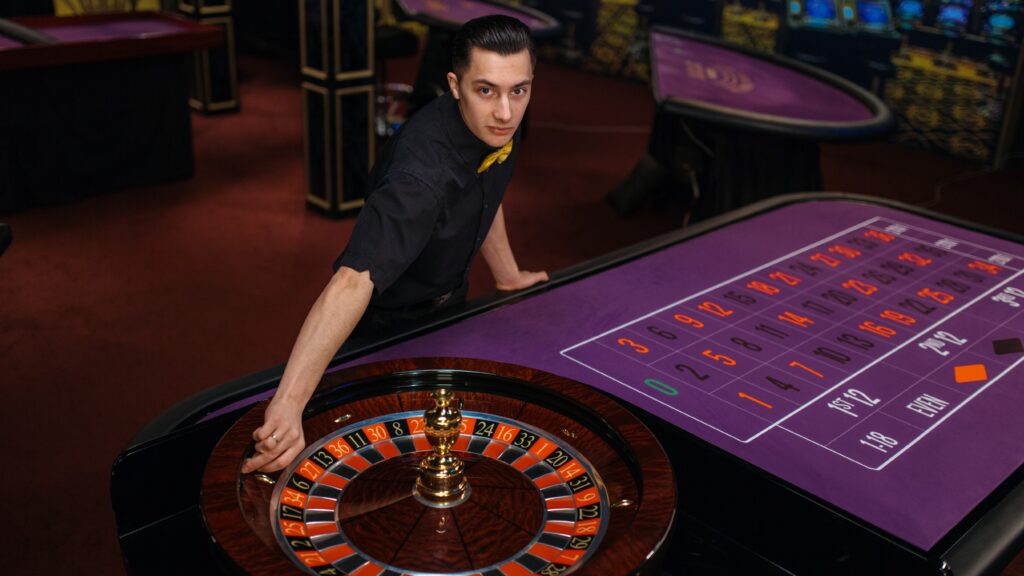
777 poker 2026 — 777 poker principiantes
Guía rápida: activa video poker jackpot desde el principio
Preguntas frecuentes sobre video poker progresivo
¿Qué hace especial a casino video poker games frente a otras salas de póker en línea?
casino video poker games se distingue por su software de alta calidad, una amplia variedad de torneos y una interfaz intuitiva que atrae tanto a principiantes como a profesionales. Además, ofrece una integración perfecta con promociones exclusivas y un servicio al cliente en español las 24 horas.
¿Es legal jugar al póker en casino video poker games?
Sí, casino video poker games opera bajo una licencia de juego reconocida, lo que garantiza un entorno seguro y justo para todos los jugadores. La plataforma cumple con las normativas de juego responsable y utiliza cifrado avanzado para proteger tus datos.
¿Cuál es el bono de bienvenida y los requisitos de apuesta en casino video poker games?
El bono de bienvenida para nuevos jugadores es de 50 giros gratis al registrarte con un requisito de apuesta de 35x apuesta requerida veces el importe del bono. Este bono se acredita automáticamente tras realizar tu primer depósito de €13, y debes cumplir los requisitos dentro de los 30 días siguientes.
¿Puedo jugar al póker desde mi dispositivo móvil en casino video poker games?
Absolutamente, casino video poker games ofrece una aplicación móvil compatible con iOS y Android, así como una versión de navegador optimizada. De esta forma, puedes unirte a mesas y torneos desde cualquier lugar sin perder funcionalidad.
¿Qué métodos de pago acepta casino video poker games para depósitos y retiros?
casino video poker games acepta tarjetas de crédito y débito, monederos electrónicos como Skrill y Neteller, y transferencias bancarias. Los retiros se procesan en un plazo de 24 a 48 horas y el límite mínimo de retiro es de 10 €, sin comisiones ocultas.
juegos de apuestas sin dinero real 2026 — apuestas seguras y rentables
Autoexclusión y pausas en casino video poker games
El juego es una actividad exclusiva para mayores de 18 años y debe disfrutarse como entretenimiento, nunca como una forma de recuperar pérdidas. En España, la Dirección General de Ordenación del Juego (DGOJ) regula las apuestas y juegos online, y ofrece el Registro General de Interdicciones de Acceso al Juego (RGIAJ) para la autoexclusión voluntaria. Si necesitas ayuda, contacta con FEJAR en el 900 200 225 o visita jugarBIEN.es. casino video poker games te recomienda establecer límites de depósito y tiempo de juego antes de empezar, y recuerda jugar siempre de forma responsable.